We monitor. We verify. We inform.
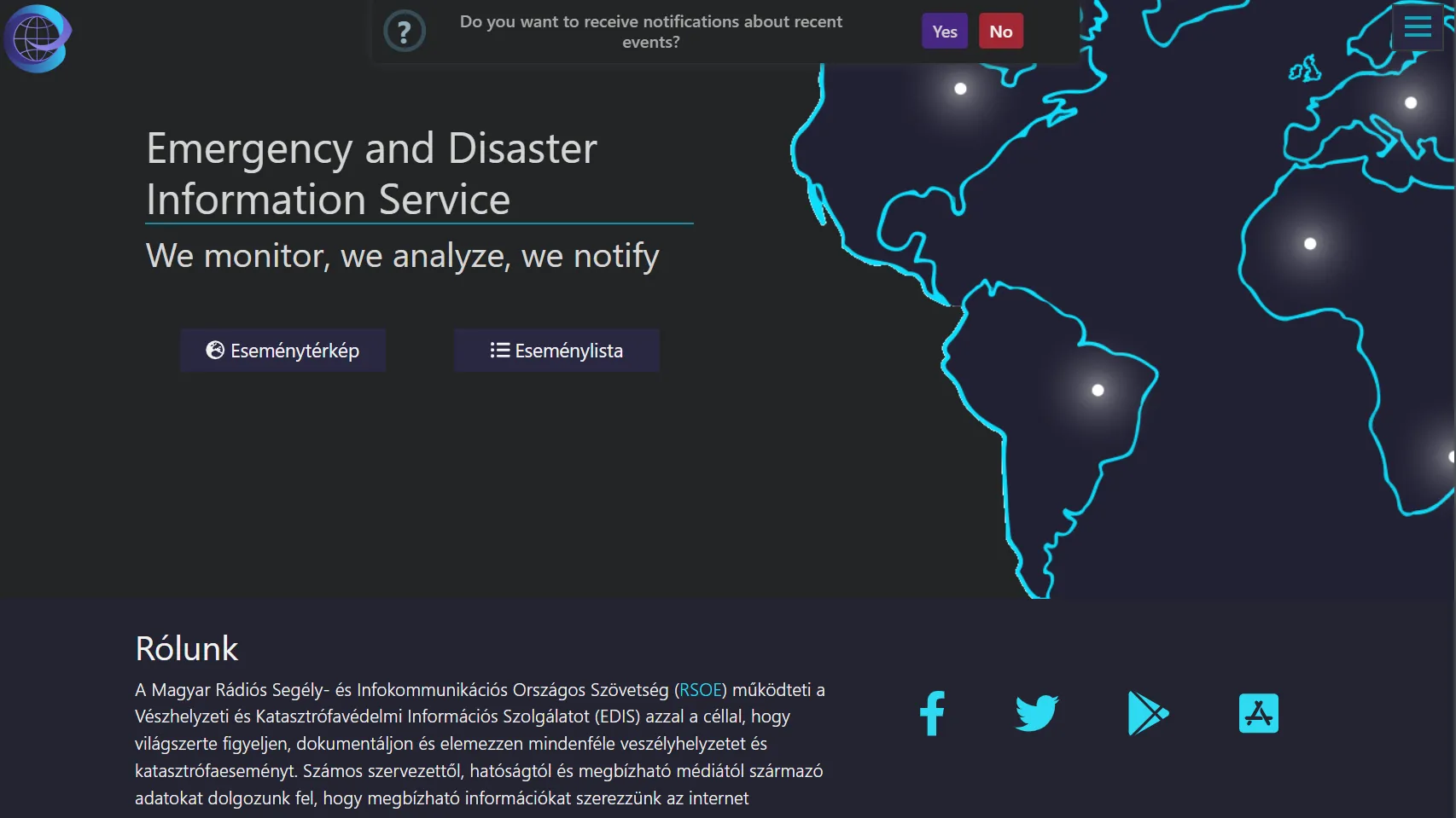
RSOE–EDIS is a global emergency and disaster information service operating since 2004. It monitors natural and human-induced emergency events around the world 24 hours a day, and makes processed information available through an event map and event list.

Worldwide event monitoring, structured information and faster situational awareness.
RSOE–EDIS provides concise, standardised and, where possible, verified information on natural and human-induced emergency situations around the world. The purpose of the service is to help users understand developing events faster, including their location, type and related updates.
Incoming information is processed into a clear situational overview.
The service follows events based on professional, official and reliable media sources, then presents the data in a processed and structured format.
Monitoring
Continuous monitoring of professional, official and reliable media sources regarding events occurring in different parts of the world.
Processing
Structuring, categorising and, where possible, verifying data so that published information can be interpreted in a consistent way.
Information sharing
Near real-time display of events on a map and in an event list, together with the publication of related updates.
What types of events does EDIS monitor?
The system handles natural, technological, biological, environmental and social emergency events, helping users interpret global hazard situations in a broader context.
Earthquakes and volcanic events
Earthquakes, volcanic activity and related natural hazards.
Floods and severe weather
Floods, severe weather situations and other hydrometeorological events.
Biological hazards
Monitoring of epidemics and other biologically related emergency situations.
Industrial, chemical and nuclear events
Vegetation fires, industrial, chemical and nuclear events, and major technical risks.
Transport and infrastructure disruptions
Major transport accidents, infrastructure disruptions and related events.
Environmental and social emergencies
Environmental damage, socially related crisis situations and other extraordinary events.
Public interface and targeted partner data services.
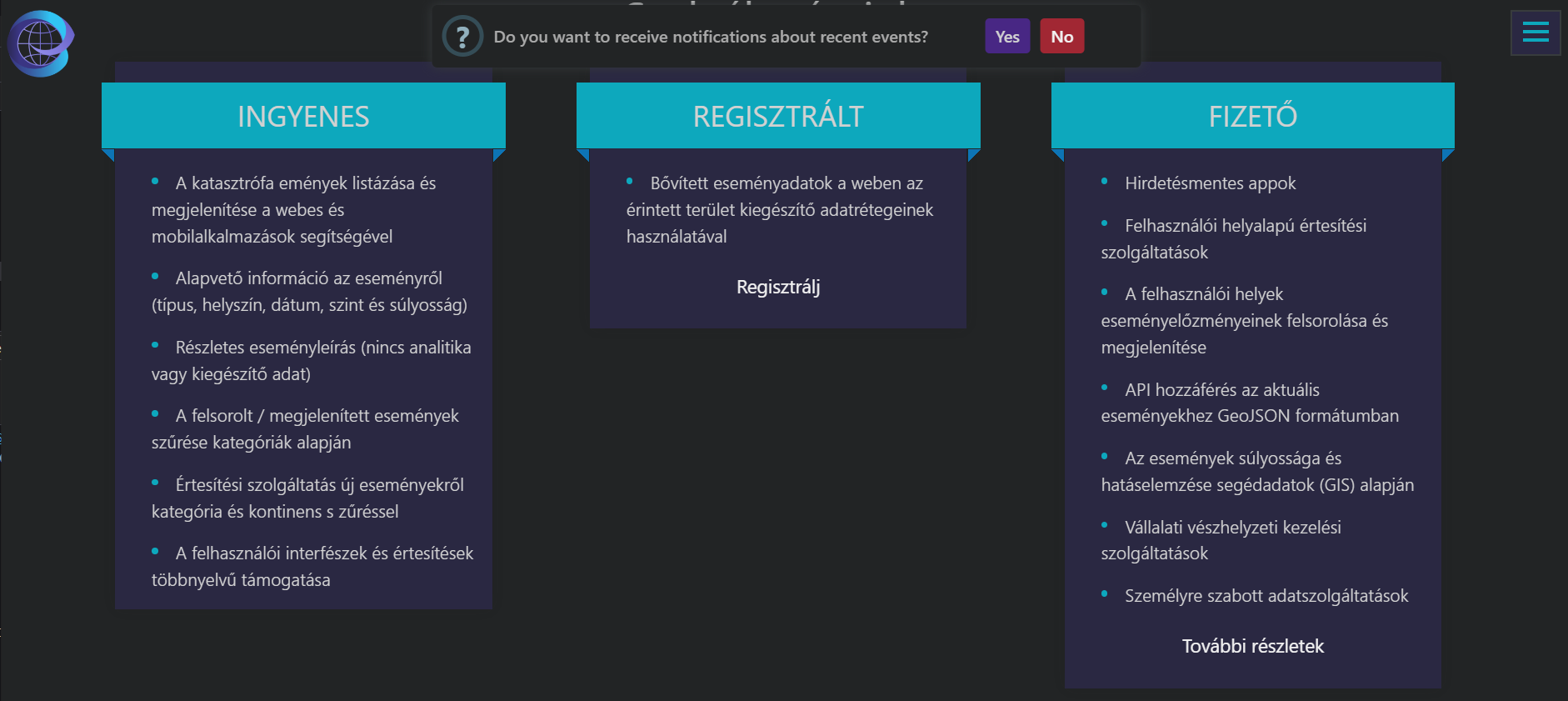
The public web and mobile interface provides an event map, event list, search, category filtering, notifications and air quality information. The Hungarian and English user interface is available to all users.
Cooperating and contracted partners may also access targeted notifications, standardised event data and information services connected to the database that has been developed since 2004.
Event map
Event list
Category filtering
Notifications
API access
Partner data service
EDIS supports faster situational awareness and information gathering.
The service does not replace official warnings, alerts or instructions issued by the competent authorities. In an emergency, official authority information and instructions must always be followed.